2006/03 Southwest USA trip (AZ-MN) - Seaquist Ranch |
|||
From Balmorhea, we had a few hundred miles of driving east across Texas. The camper was flying with a very strong tail wind, our best gasoline mileage ever. We followed the Interstate to the town of Junction and then headed up towards Mason and the Garner Seaquist Ranch. This is where we had tried to go mining for topaz back in January, but couldn’t as it was deer hunting season. This time it was OK and we had directions to go to the Nuway store in Mason to pay for mining and camping and get the key to the ranch’s gate. We found Nuway and then the ranch and its camping area which looked more like a cow pasture! We seemed to have caught up with the bad weather again as it was in the 50s and windy and dark. We hoped for better the next day.
Sunday February 26th
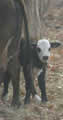
When we woke up the sun was shining and we were surrounded by cows. We seemed to be in their breakfast spot. I took the map we’d been given at the store and tried to match it to the ranch’s terrain. I found Topaz Creek and Topaz Gulch. There seemed to be a theme here! Both had patches of water, but not enough to be flowing. The water would help us as we could use it to wash the gravel. It was also helping the mosquitoes, as it was already home to mosquito larvae.
We set out along Topaz Gulch as that looked most promising. Topaz can be yellow, sky blue, or clear. It looked like the gulch 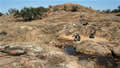 had plenty of quartz, which can also be yellow and clear so distinguishing the good stuff was going to be difficult. We were also finding a yellowish jasper with some nice markings, so we were going to go home
 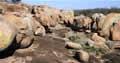 with something anyway. As we moved up the gulch we could see why the cows were so keen on our campsite. The rest of the country is a jumbled mass of pink granite, with boulders, cliffs, and just a few patches of grass. The pink granite is decorated with lime green lichen, artistic, but nothing the cows can eat.
We were mainly digging and sifting the gravels in the streams, without much luck. This area is famous for its topaz, and the gravels have probably been worked over many times.
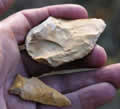 We met a couple of librarians from the University of Texas at Houston who had the idea of digging up on the hillsides, and choosing a spot where a quartz vein went under the topsoil and then going down to bedrock, much harder work than what we were doing. They were hoping that they’d be the first people to dig in that spot, but then halfway down they found a beer can poptop and knew that someone else had dug there before them. They didn’t find much this time but one of them said that he’d found a cache of 3000 year-old arrowheads on an earlier trip. Sandie found an arrowhead too, and I found what was likely a scraper. We think this was probably a place where the Indians came to find pieces of jasper and work them into tools and weapons.
We’d had sufficient digging by late afternoon and finished early enough that we had time to sit outside and drink a beer amongst the cow dung and watch the sun go down.
Monday February 27th
The cows were back in force in the morning, and very vocal. The reason for the noise was that the ranch owner, Mike Seaquist, 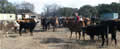 had arrived. He was there to check on a cow that had been in labour the previous day, but the cows thought he was there to feed them; hence the excitement. The cow had given birth to a good-sized calf so Mike was happy. He has about thirty in the herd and said that nobody can survive on the income from such a small herd. He is a retired vet and the herd is more of a hobby. It enables him to continue to play the cowboy. His family originally came from Sweden. He said the mix of nationalities and religions and range wars and civil war allegiances had made Mason County a violent place in the past. He’s traveled quite a bit, to BC and Australia, and said he’d left a lot of money in Tasmania, gambling at the Hobart Casino. He and Sandie enjoyed swapping stories about cows and cow illnesses and remedies.