2006/02 Southwest USA trip (NM-AZ) - Saguaro national park |
|||
 Tuesday February 7th
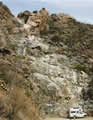
We made a serious attempt to get to Saguaro national park this time, but first we just had to drive the road across the Santa Rita Mountains. We’d seen the signpost on the way in, even though the road wasn’t on any of our maps. It was a narrow rock road up and across a box canyon. The only other traffic we saw was the Border Patrol. This was great scenery, but Sandie wasn’t too keen on some of the drop offs on the steep sections.
We came out onto main road from Patagonia (No not the one in Argentina) to Tucson, also quite scenic. We had to pull off the road for a house that was being transported south and filled the road, and then, while rejoining the road, one of our crates fell over and created the great Coke explosion. Coke is a good floor scourer, but the residue isn’t too nice. It’s the first time we’ve had a plastic bottle explode on us. Pop cans are more fragile and we’ve largely given up on them. One of the other problems with cans is that the vibration from gravel roads causes the paint to wear off into a powder and when you pick one up you get a red or green hand for the rest of the day.
We drove up the east side of Tucson through its distant suburbs to Saguaro national park. We had got there at last! The park 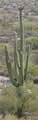 has a drive and trails that go through a saguaro forest, with thousands of giant cacti, up to 50 feet high and up to ten tons each. The saguaro grows very slowly and usually begins life in the shade of some other plant, such as one of the green palo verde trees. When it grows large enough, after maybe thirty years, it often kills the tree by taking all its water. It stays as a single tall barrel until it’s about 70 years old when it might grow a single additional arm. The big ones with multiple arms, like the one in the picture, may be 150 years old.
The surrounding desert is home to prickly pear, agave, ocotillo, and all the varieties of cholla, so you have to really careful where you walk! Even the palo verde trees, with their green limbs and foliage have long green thorns.
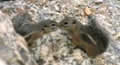 Saguaro national park does not have a campground so we had to leave and find a spot for the night. We’d originally planned to head for another national forest spot, high up on Mount Lemmon, but the staff at the park had recommended Colossal Cave county park, just ten miles down the road. We were dubious, but it cost us just $5 to get in and camping was free. The lady at the gate warned us that the road was a bit rough. Actually the bits of the road that were still there were OK, but the stream had washed out the road in a few places and
 we had to drive along the stream bed. We camped at the end of the canyon and the only other person that bounced that far along the stream was the ranger, so it was our kind of campsite. We had rock cliffs all around us and a skyline of saguaros, so this was as good as camping in the Saguaro park itself. We’d had a cloudy day, but it was warm and still into the seventies at nightfall.