2003/03 Olympic Mountains trip - Ruby Beach and Hoh River |
|||
The next morning it was still raining when I headed along the coast to Ruby Beach, a pretty spot with a 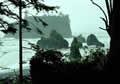 creek coming out into a bunch of sea stacks and islands. The route to the beach was blocked by a mass of logs, and rather than climb over these I bushwhacked down to the creek and was really surprised to see a big wave going right up the creek. It must have been a sneaker wave (a rare wave much bigger than the usual) as I didn’t see this happen again.
This was a really photogenic spot, with the islands, big trees, logs, and the creek, very much like Vancouver Island. However, the heavy rain was limiting the pictures I could take on the beach, so I moved inland to the Hoh Forest.
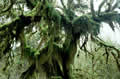
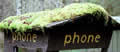
The Hoh River is fed by the glaciers on the west side of Mount Olympus, which sits up there squeezing all the rain out of the weather systems as they roll in off the Pacific. Last month, the Hoh valley had over 3 feet of rain and a few storms with really high winds. This all combined to mean that the trails were muddy with a lot of trees down. But the result of all that rain is an 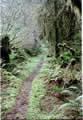 absolutely beautiful rain forest. Every tree and branch was covered with moss and every inch of ground was covered with ferns.
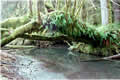
I walked a few trails around the visitor centre and then headed up the Hoh River trail. This goes all the way to the glaciers, over thirty miles, and I didn’t expect to get anywhere near that far but in the end I only made a few miles. Whole sections of the trail had been washed out, bridges were missing, and trees were down, so there was lots of climbing over, crawling 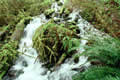 under, wading across, and balancing on tree bridges.
Eventually, after crawling over branches to cross some side streams, I gave up on the trail and just 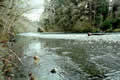 walked upriver on the gravel bars until I ran out of dry land. Although this all sounds very grueling, I had some good rain gear and boots, so I was reasonably comfortable most of the time. I met a herd of elk in the forest. These
 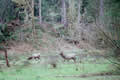 are Roosevelt or Olympic elk, and the park was originally created to protect them